
Jun 2025 - Jan 2026
Brain Dump & Clarify
An End-to-End Approach to Building a Journaling App
Prompted Journal
Productivity
B2C
Cognitive Loads
Liquid Glass
Getting Things Done
Team
Product Designer (me)
Full-Stack engineer
Impact
3 month
MVP Launch
22
Valid Survey Responses
I co-founded this app as the lead product designer and researcher, building it from scratch alongside a full-stack iOS engineer. We both love productivity tools and wanted to test out Apple's new Liquid Glass UI. What started as a fun design experiment quickly grew into our indie studio, NRF2. We handled everything end to end, and you can find this App on the App Store!
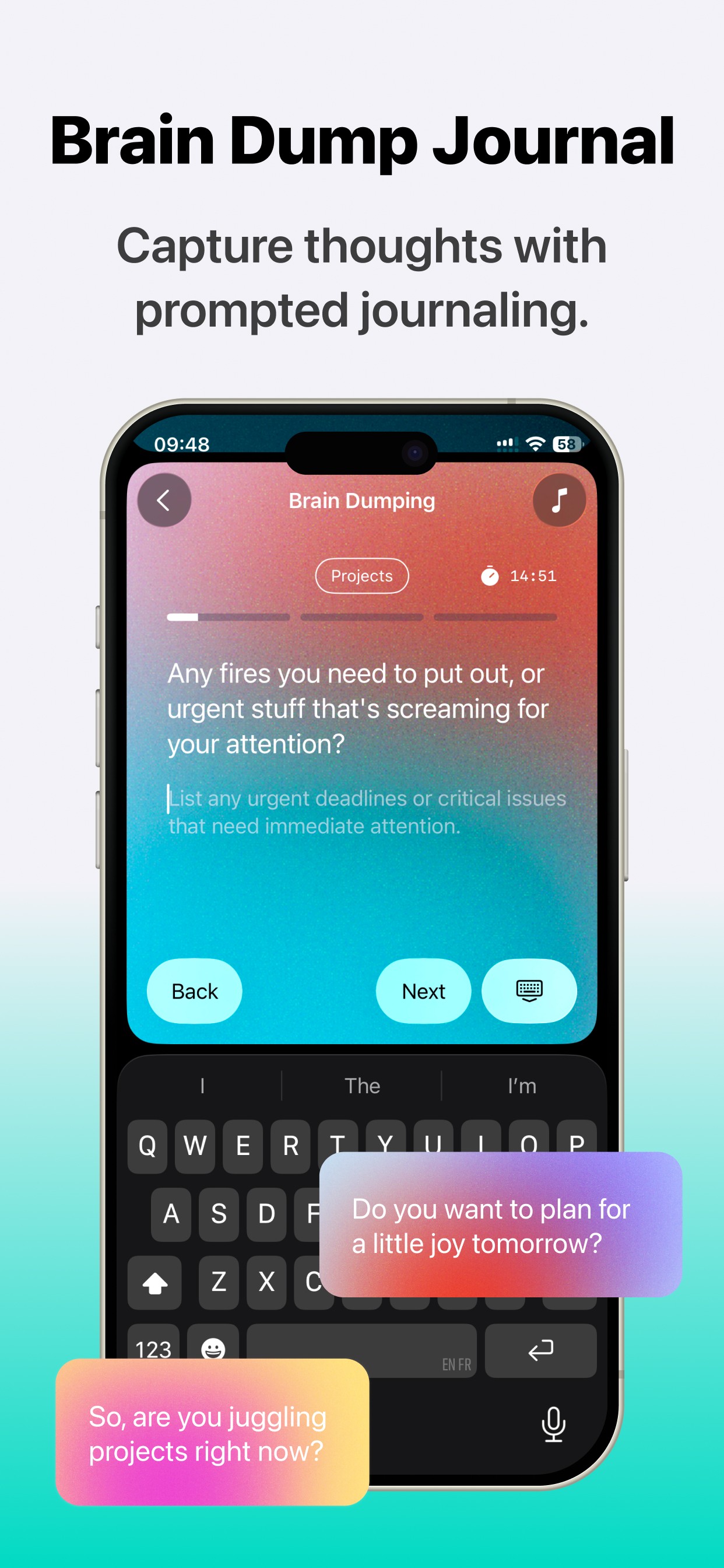
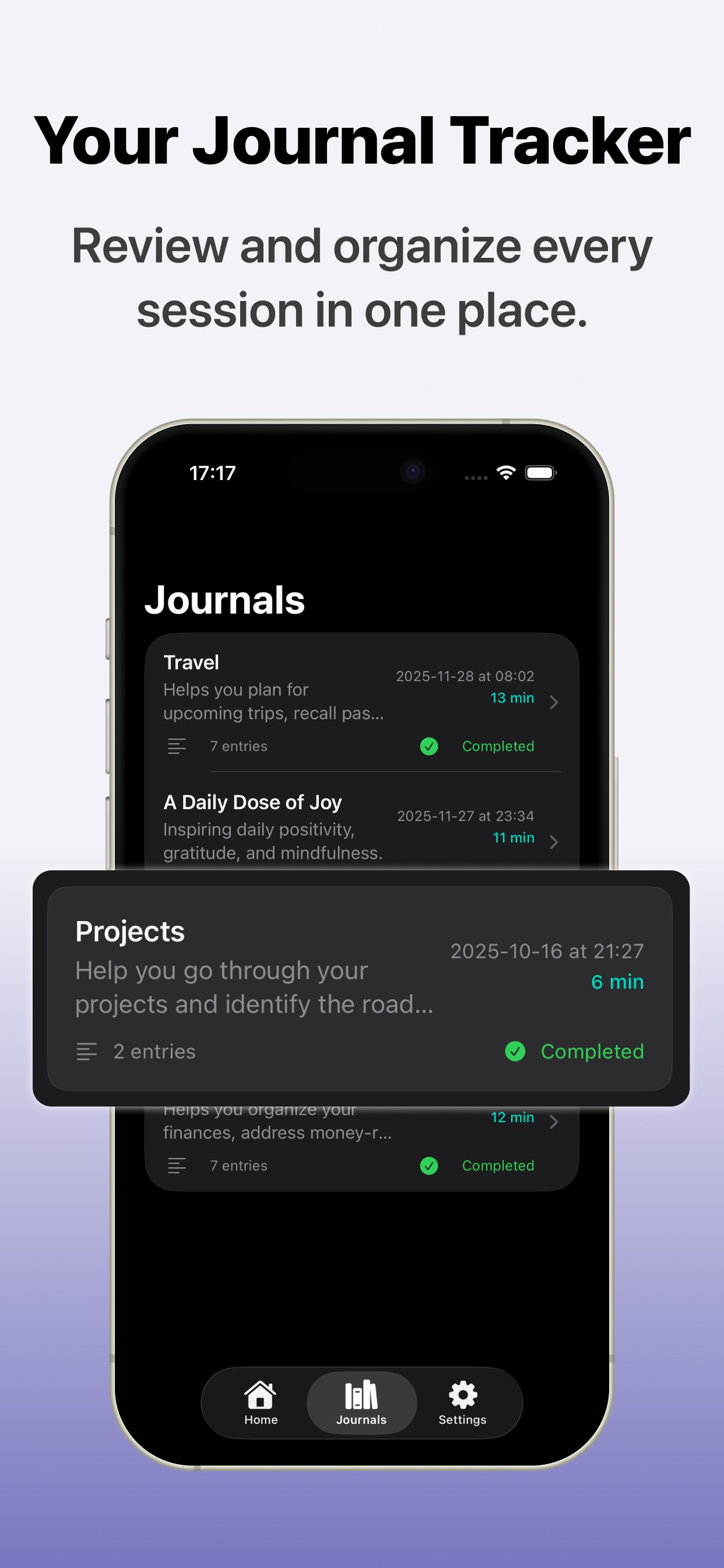
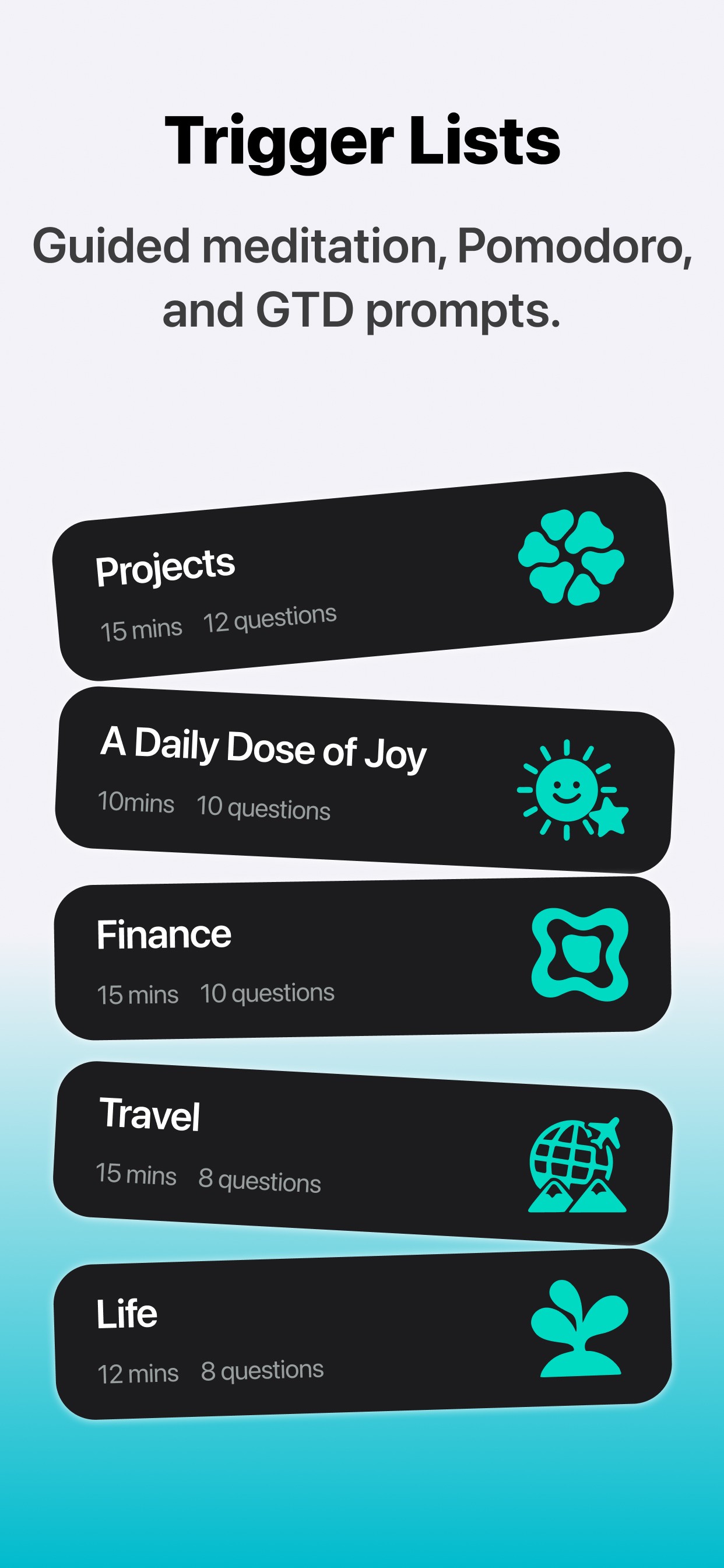
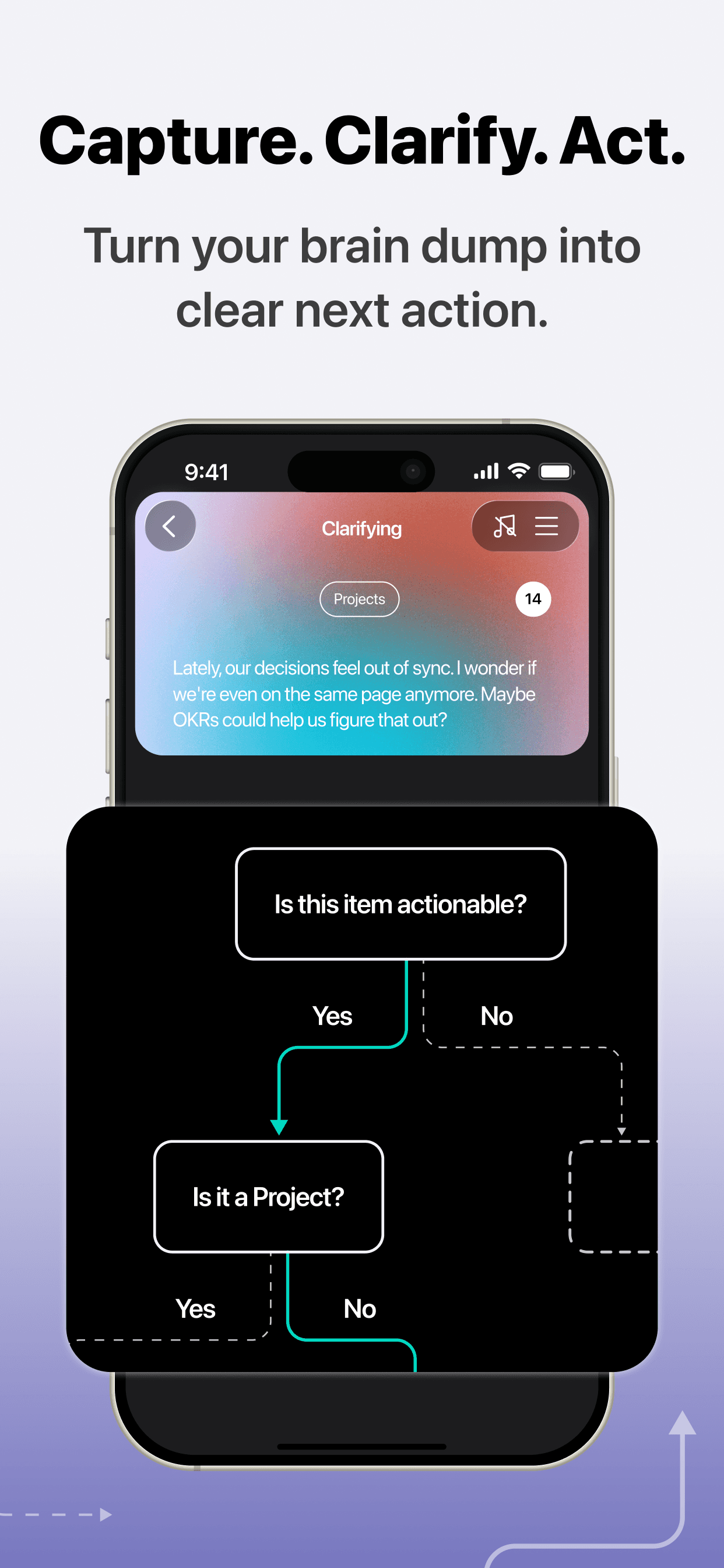
Why We Made This APP
The Real Problem Behind To-Do Apps
People don't just forget to write tasks down, they actually don't even know how to start unloading their thoughts.
Despite the abundance of do-to apps on the market, we noticed people still struggle to execute their tasks efficiently. Through early observations, my engineering partner and I realized the root cause: traditional to do lists assume users already know exactly what they need to record. However, the real friction happens way before that. Users lack a structured habit to capture their scattered thoughts, leaving them paralyzed and unsure of how to even begin a brain dump and giving us the perfect foundation to build a guided prompted journal instead.
How We Started
Market First: Validating the Market with Crowdsourced Surveys
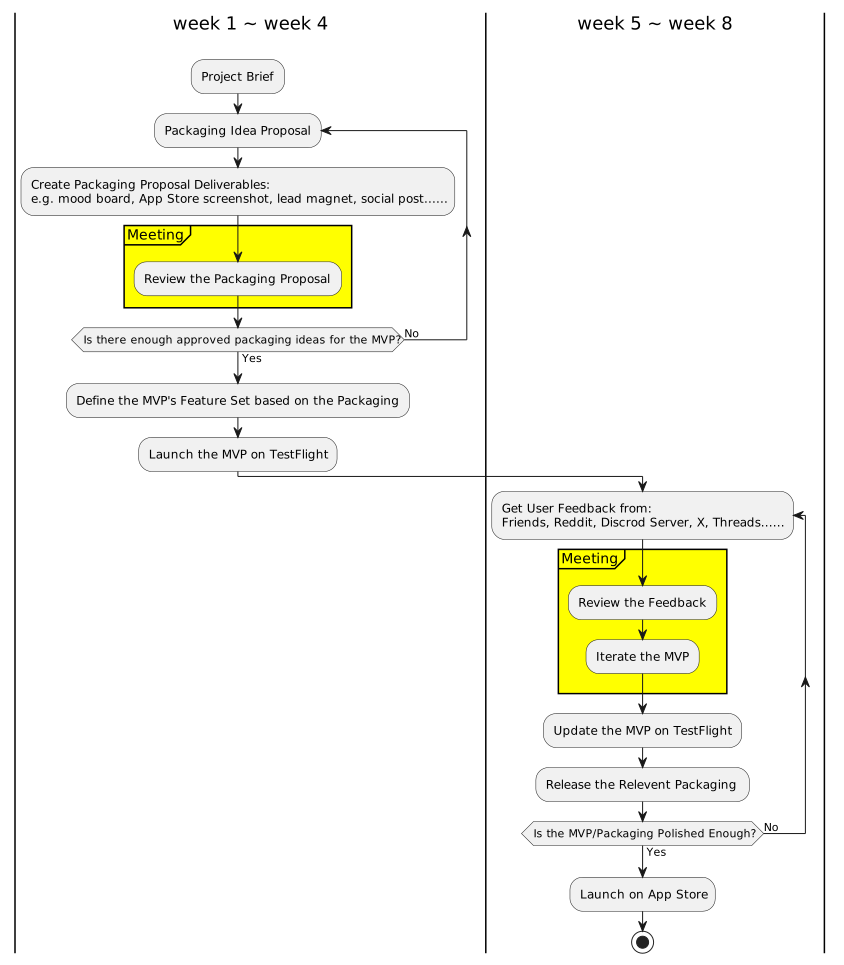
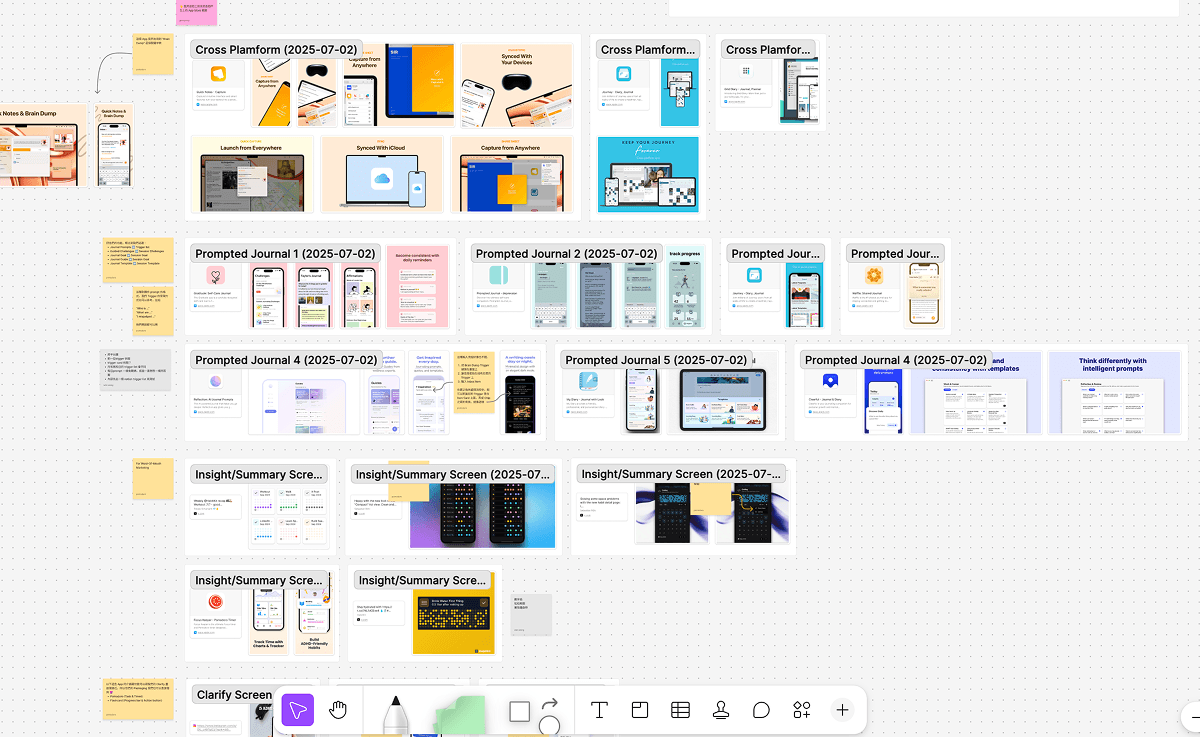
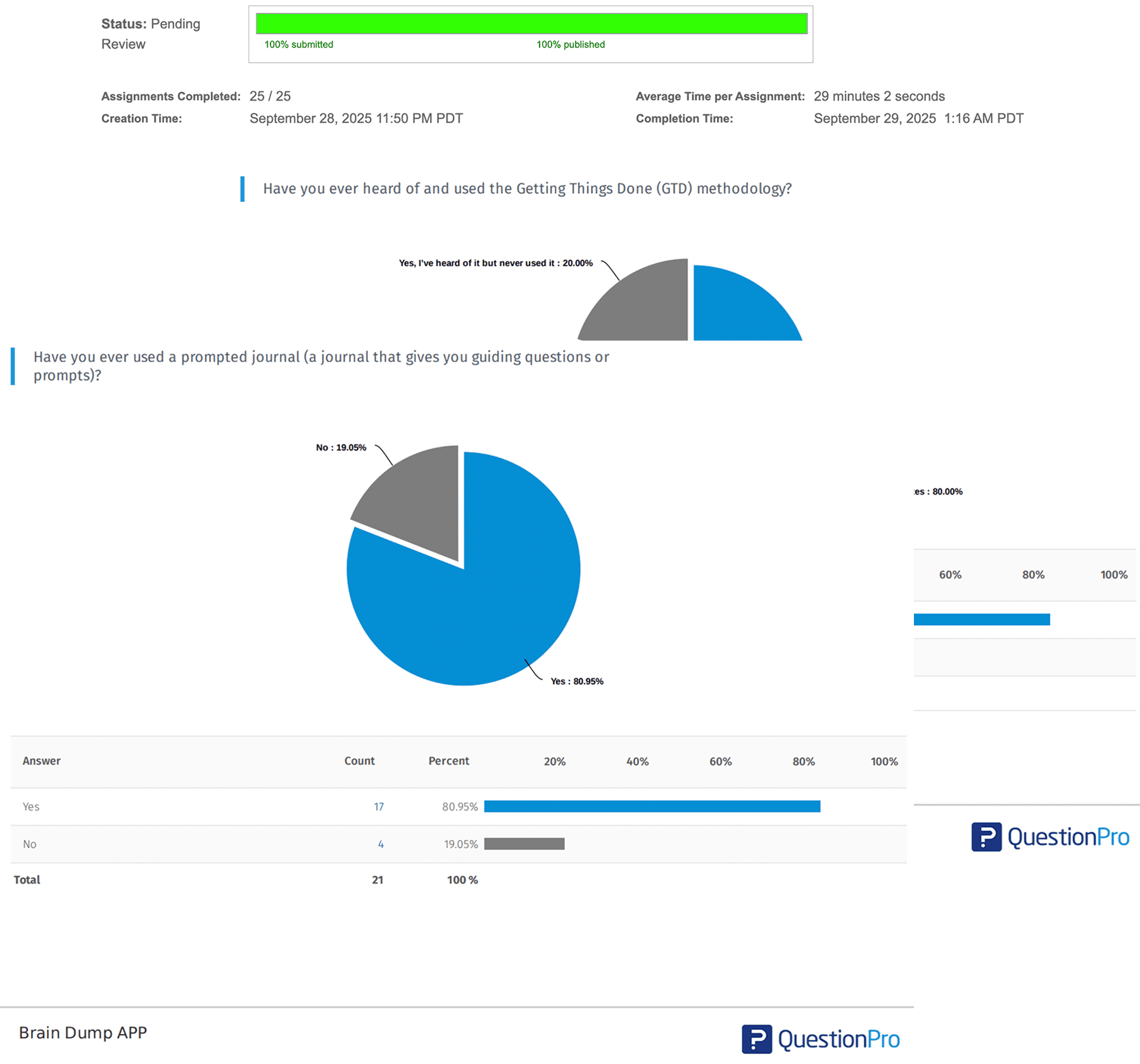
I conducted a landscape analysis and gathered 21 valid survey responses to refine our product positioning.
Instead of just guessing what users wanted, we started with a landscape analysis to position our product perfectly in the productivity space. I then ran a survey through Amazon Mechanical Turk to validate the intersection of journaling and Getting Things Done Methodalogy. Securing 21 valid responses from our target audience gave us the data driven confidence to move forward.
This idea came from the product "Nest".
Landscape analysis on Figjam.
MTurk and QuestionPro for crowdsourcing survey.
The First Design Draft
The First Design Draft and User Flow
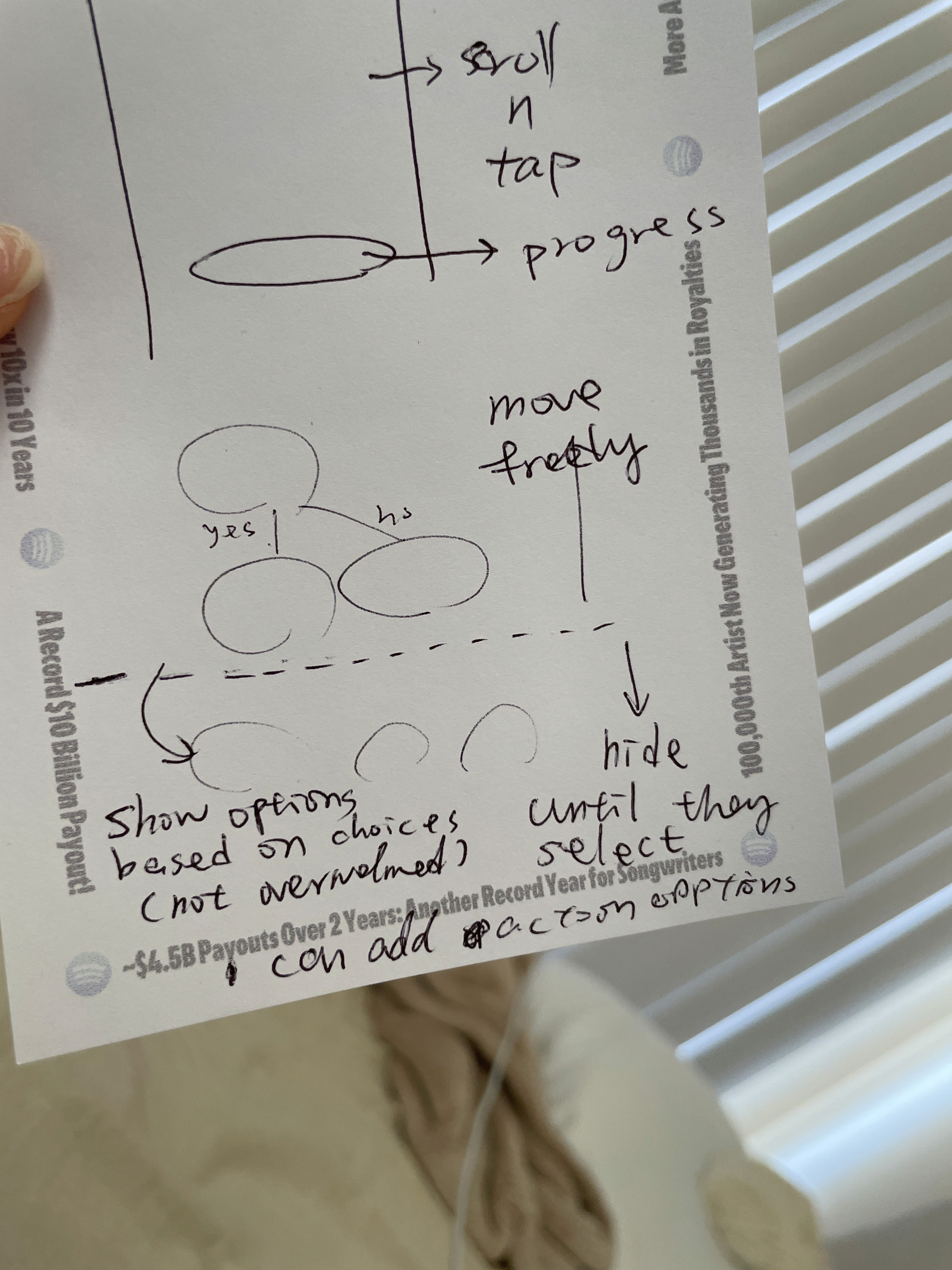
I designed the initial architecture to include core functions.
Armed with our survey data, I built the first design draft. The initial flow was ambitious. It included a home screen, diverse trigger lists to prompt thoughts, and a sequential journey where users would first brain dump their thoughts and immediately transition into clarifying their next actions. This comprehensive draft served as the perfect tangible artifact to begin our early testing.
The First Design Sketch
First User Flow.


After The First Design
Testing Early and Redefining the MVP Scope
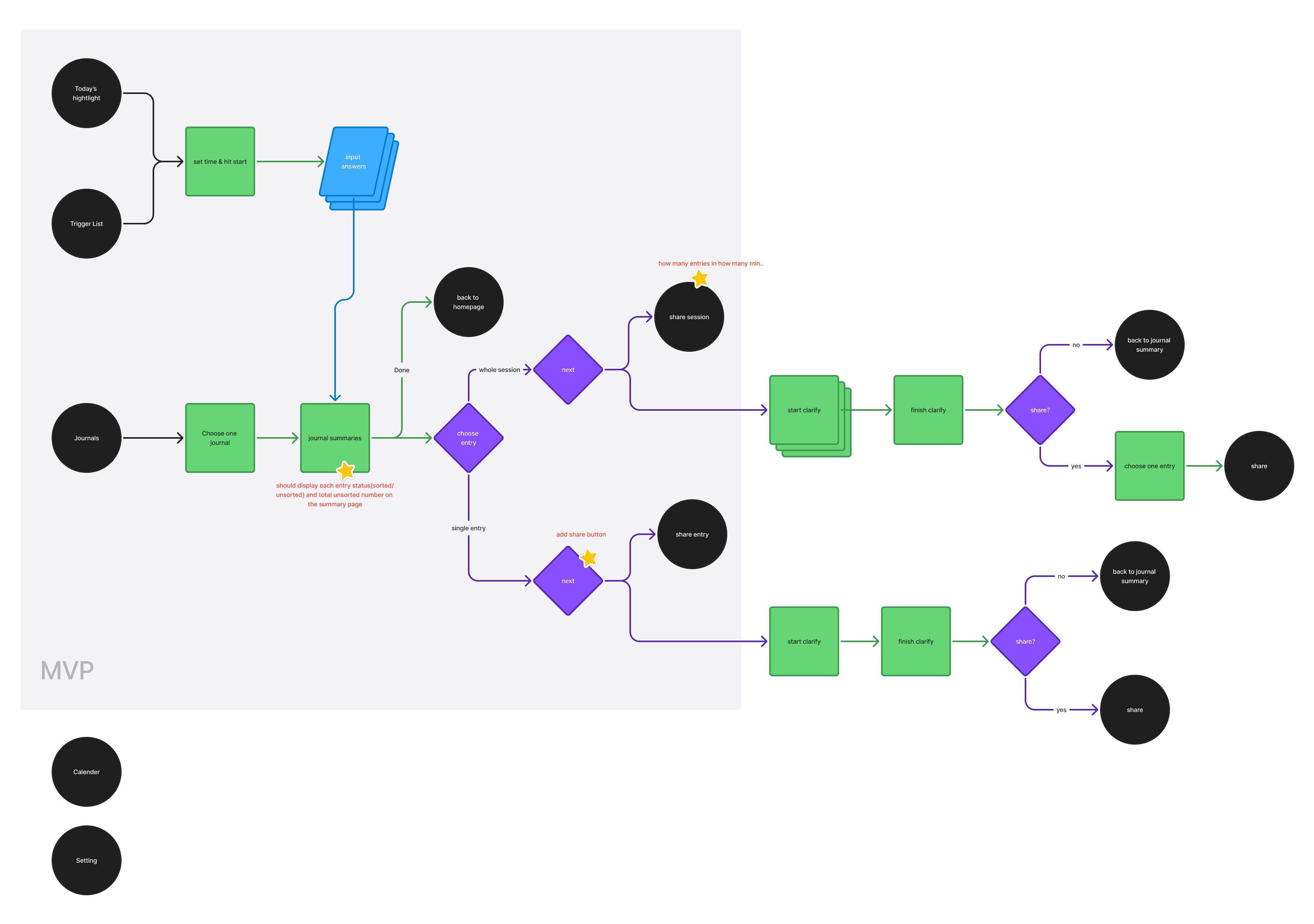
I ran cognitive walkthroughs and strategically separated the core user flows to reduce friction.
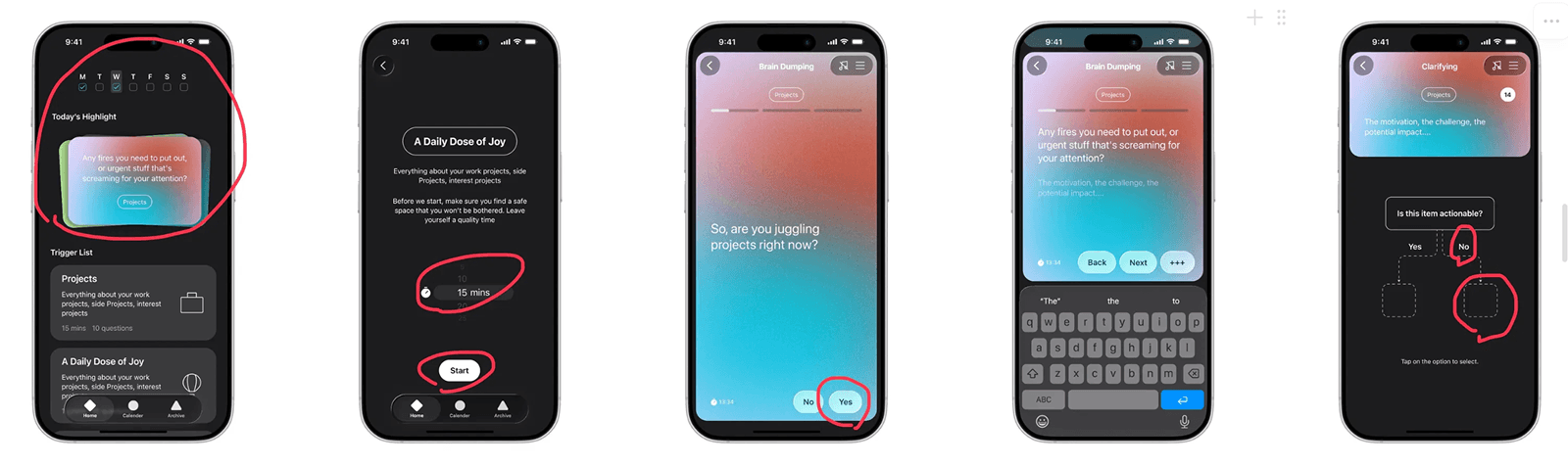
Once I had the first design draft, I ran cognitive walkthroughs to test the experience early. The research revealed a massive insight: forcing users to dump their thoughts and clarify them in one single flow was way too heavy. I made a major strategic pivot to separate the two actions. We intentionally scoped down the MVP to focus entirely on frictionless thought capturing first.
Cognitive walkthrough tests and followup changes.
Redefined MVP scope.
Marketing Strategy
Validating the UI and Driving App Store Growth
I verified the redesigned homepage with five second tests and implemented a targeted growth strategy.
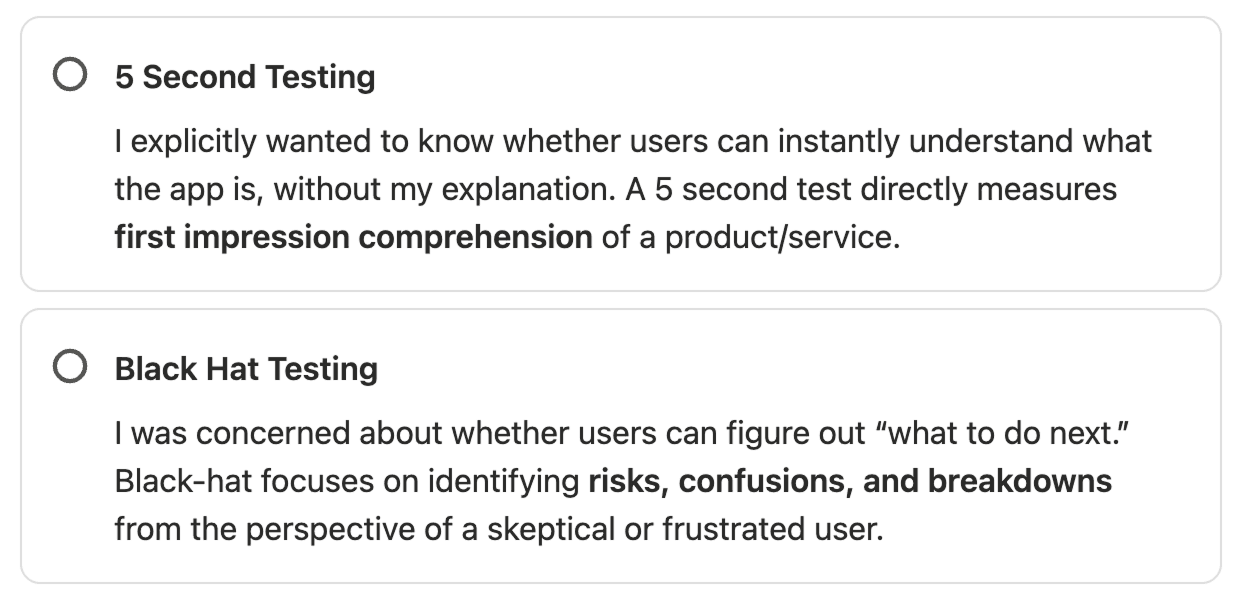
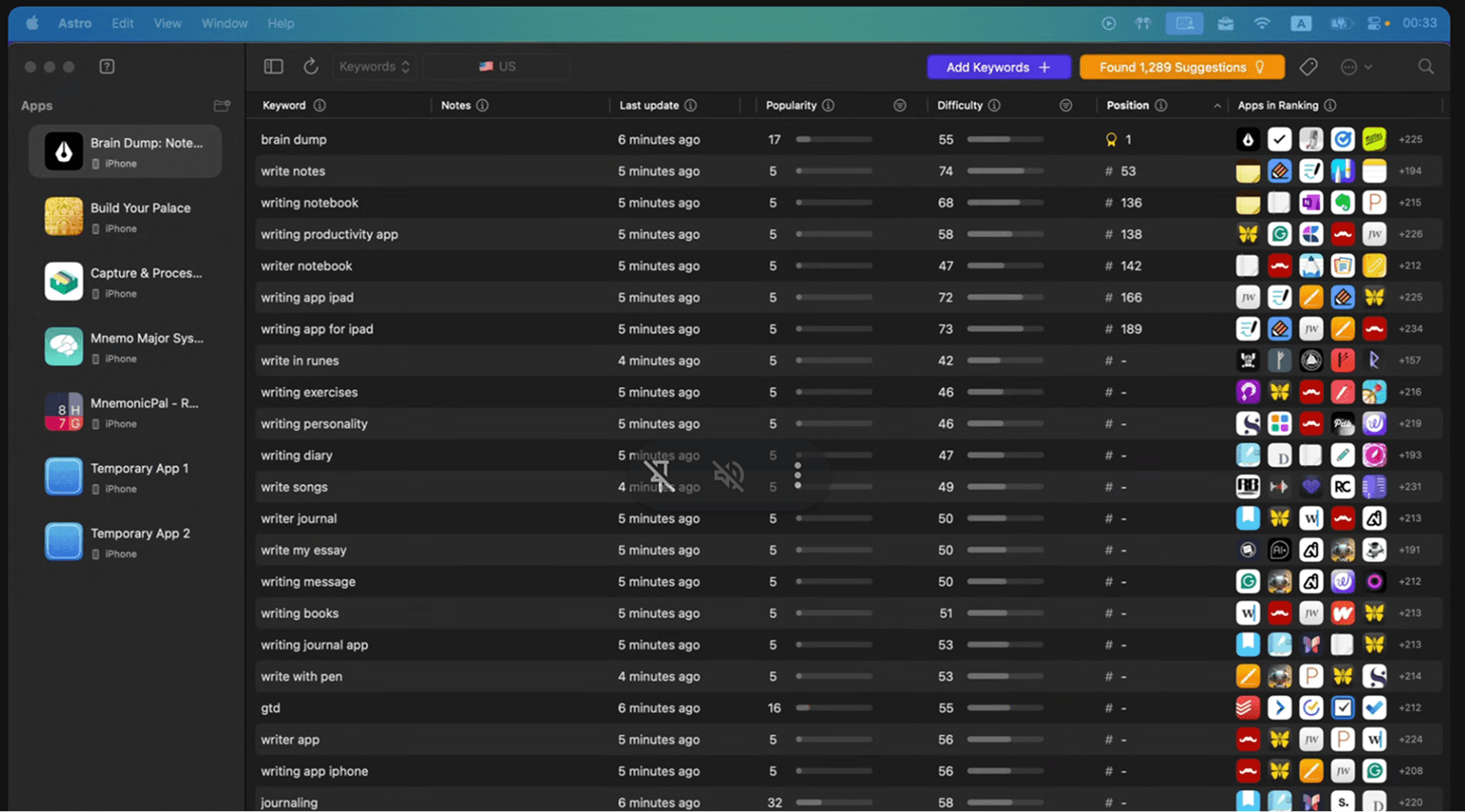
After redefining the scope, I ran two rapid usability tests, including a five second test, to ensure our new homepage communicated its value instantly. But the work did not stop at launch, and I immediately shifted my focus to App Store Optimization. I used data analytics tools to refine our keywords, boost visibility, and improve conversion rates.
Quick tests for the visuals.
Keywords for Improving App Store Optimization (ASO)
The Result
3 Month Launch and Data Driven Results
A lean two person team shipped a fully functional iOS app in three months by turning six core research insights into a focused strategy.
We did not just design a concept, we actually shipped it. Operating as a micro team of just one designer and one developer, we successfully launched our MVP to the App Store in a strict three month timeframe. I ensured every design choice was backed by data. We secured twenty two valid survey responses, extracted six core insights to pivot our strategy, and ran two rapid tests before launch. We proved that a small team can build a highly strategic product.
3 month
MVP Launch
22
Valid Survey Responses
Retrospection
There’re so many other things outside of the APP itself.
As a designer, we often focus on optimizing the experience and visuals of the APP itself. But there're many thing we can consider.
Like one way to improve user engagement is to post your working process in public, inviting people to see how you build the product.
Be humble, be curious, and find your team.
It sounds cliche, but it's so true! I asked questions when I wasn't sure, I didn't stick to my design opinions only because I was the designer. And I ended up learning more things from other people than I could ever expected.